Using Delay with ERP homework
A short, practical guide. It assumes you're already doing ERP with the client and want something for the days in between. Read time is about four minutes.
Who it tends to fit
- Adults in active ERP who understand that the goal is not responding to the urge
- Reassurance seeking, checking, mental reviewing, and late-night spirals
- Clients who do well in session and lose ground between them
Not a fit: anyone in crisis or at risk of self-harm, situations where waiting would be unsafe (real medical or safety needs), or clients who are early enough that they can't yet tell an urge from a real concern. Delay doesn't assess risk.
Setting it up in session (about five minutes)
- Pick one target. One compulsion or one kind of reassurance seeking. "Texting my partner to ask if they're still attracted to me" works better than "my ROCD."
- Pick a starting delay. Choose something they can actually finish. The app ramps automatically from two minutes, or they can set a fixed length from 1 to 60 minutes under Me, Timer Duration.
- Write both on the handout. There's a space for the target, the delay length, and anything you want them to skip.
- Do one together. Have them start a two-minute delay in the room. The first one is the hardest to start alone.
What they do during the week
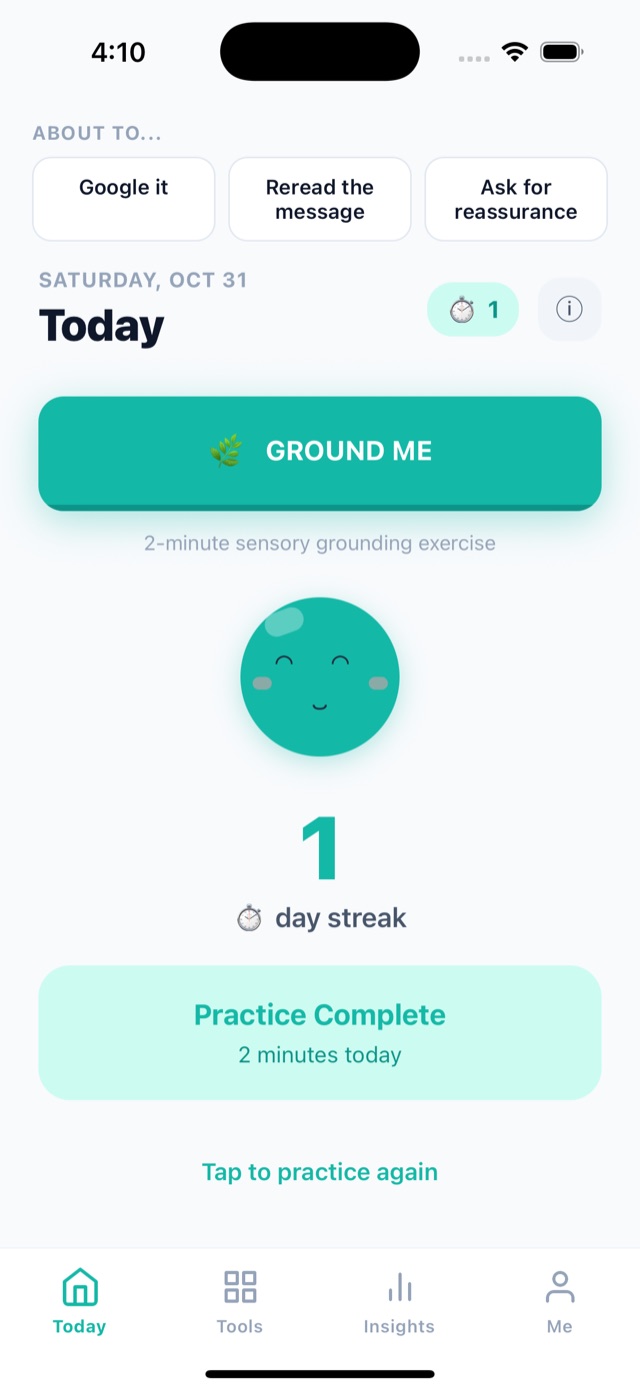
- When the urge shows up, open Delay before responding. The home screen has buttons for the common ones: Google it, reread the message, ask for reassurance.
- Let the timer run. They don't need to feel better, they just need to not do the thing yet.
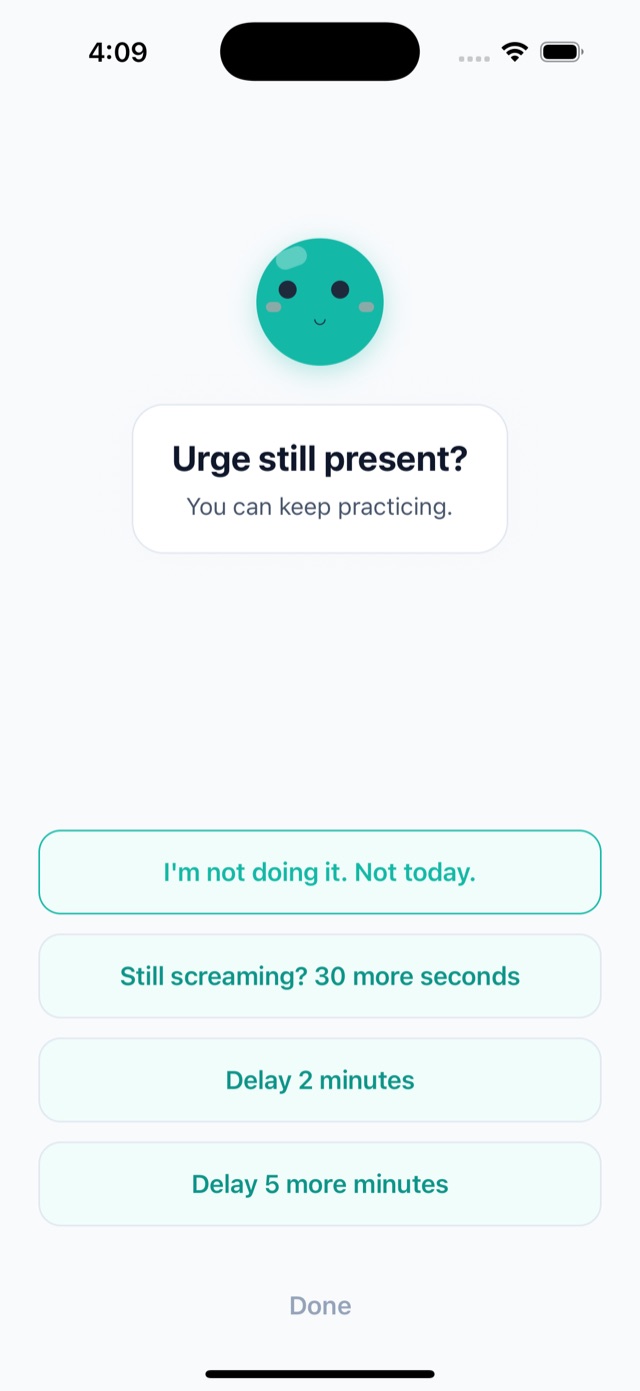
- When it ends, they can stop or add time if the urge is still loud.
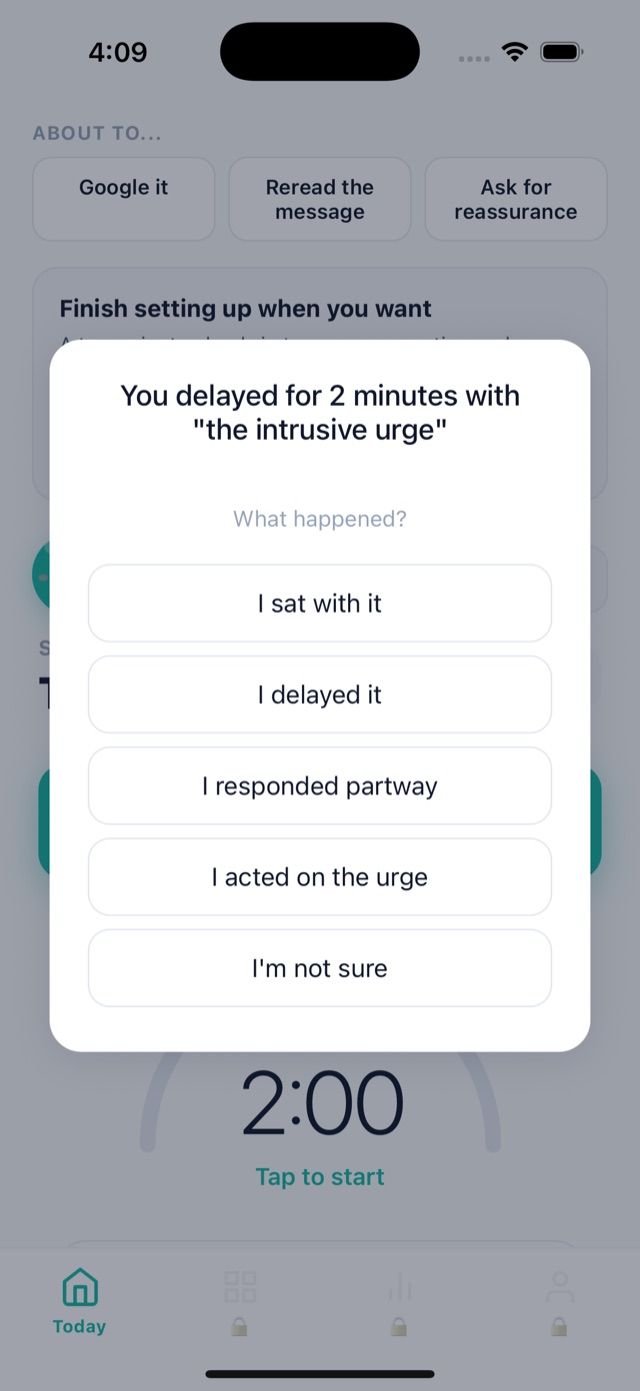
- Log what happened: sat with it, delayed it, responded partway, acted on the urge, or not sure.
Reviewing it in session
- Look at the mix, not the streak. A week with more "delayed it" and "responded partway" entries is movement, even if some say "acted on the urge."
- Treat "acted on the urge" as data. Ask what was different about those times. Hour of day and setting usually tell you more than willpower.
- Check the length. If every delay ends at the first stage, the length may be too long, or the app may be getting used as a countdown to the compulsion.
- Let them hold the phone. The log never leaves their device. They choose what to show you.
Fading it out
The end goal is not needing the app. A rough path that has made sense for people:
- Longer delays, then delays that end with no compulsion at all
- Fewer delays, used only for the hardest moments
- Maintenance mode: two minutes a day with no streak pressure
- Not opening it, or deleting it
Signs it's turning into a ritual
- They can only resist "with the timer," or panic when the phone isn't nearby
- The delay becomes permission: "I waited 15 minutes, so now I can check"
- They open the pattern library to find out whether a thought "is OCD." That's reassurance seeking. Tell them to skip the library.
- They worry about breaking a streak more than about the urge itself
If you see any of these, it's a good time to change the target, shorten the role of the app, or set it aside.
Safety
Delay isn't monitored and can't respond to a crisis. Every timer screen links to crisis resources, and the app lists 988 for the US. Please make sure clients know the app is practice, not a way to reach you or anyone else.
Tell me what's wrong with it
If anything in Delay works against how you run ERP, I want to know. Email max@delayocd.com and you'll hear back within 48 hours with what I'm changing, or why I can't.